
As We Move Homes, Do Not Forget the Power of Memories Locked in the Physical Items We Throw Away

Home. It is a word that is often laden with so many emotions: a sense of belonging when there, longing when not, indifferent when ridden with conflict, joy-inducing when filled with loved ones. People say that what makes a physical place "home" is what is inside: the people, the neighbors, and that feeling of being safe from the elements and troubles brewing outside. For them, a home can be mobile and ever-shifting> As long as what one associated with the home can move together with the person, then the home can be anywhere, in any building.

But that feeling of being in a home cannot be completely dissociated from the physical place where it is established. Yes, family members can indeed move, ensuring that an important element of the home, that sense of belonging to a wider community,  can move geographically. But belonging does not merely come from other people. It is also that physical place, manifested through that familiar bed, desk, carpet, and wall posters, that differentiates a home from just another residence. That investment in effort, care, thoughts, and time to customize the place for one's liking is also what makes a place a home.

As I come to my last couple of days in my current apartment, I am especially conscious of these physical manifestations that create an alternative meaning of belonging. Many of the big-ticket items that have defined home for the past two years, from the sofa and chairs to the refrigerator and the washing machine, will be gone forever. They will be replaced at the new home, of course, but the new companions will not be the same, both in terms of their visual appearance and emotional connection. The hassle I went through for some of them only binds me stronger and makes the goodbye that much sadder.
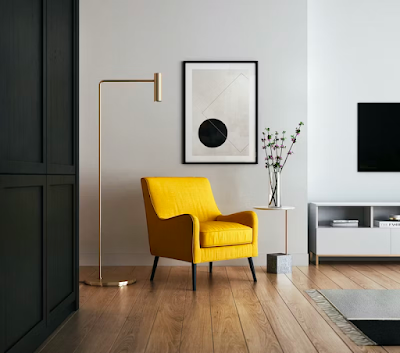
Looking back at the post I wrote two years ago on moving to the current apartment, I can see how these physical items associated with every apartment move are no mere collection of materials needed for a convenient life. The joy behind picking them out, purchasing them, and assembling them for use represents that new beginning, a new chapter of life, something to switch up the monotony of everyday corporate life, and the fact that, despite all the talks of constantly taking up challenges, the average Joe rarely ventures into the complete unknown.

Perhaps it is that joy of something new with a new group of companions that makes certain items part of a home's definition. Just like friendships are built on going on adventures to new places for new purposes, physical items in a new home represent the excitement of mutual support in tackling the unknown. Long-term friendships are built on the occasional reminiscing of those exciting adventures "back in those days" when the friends were younger, less burdened by bills and babies, and sprightlier in the legs. So can the homemaker reminisce about all that's happened in the home, in the sight of the tables, chairs, and sofas.

Those memories are incomplete without those that we shared them with. That is why it hurts so much when we lose a long-time friend. Who else can we talk to about "remember that time we..." without having to explain all the details and the feelings in between. That emotional connection without having to explain verbally just cannot be replaced with another person uninvolved in the episode firsthand. Maybe the furniture and electronics we have lived with for years are just like those long-time friends. They cannot talk back to us, but they can reminisce with us all the same.

If memories represent a part of who are, and the memories are incomplete without our friends, then it is no wonder that every new apartment move is a source of sorrow. As some items are tossed out forever, we lose a part of our identity in the time we spend with them. Perhaps new memories at a new home, with new big-ticket items, will introduce new sources of excitement that overwrite those lost memories. But the sense of loss is all the same. No new adventure with new friends can entirely replace our past, interspersed with stories that defined us up to the current point.

So as we cherish a home, we ought to remember that we cherish it not only for the people it represents but also for the things that inhabit its premises. It is easy to be dismissive of inanimate objects for the little impact they have on our lives. That is why clean-up gurus and crews run brisk businesses. But it is also worth not forgetting that, just like people, they host fragments of our memories that define who we are. So let us be understanding of those who struggle to clean up too: maybe they are just more emotional than the rest of us, more cherishing of the bonds they created with the items in their homes. 

Comments

Popular posts from this blog

Sexualization of Japanese School Uniform: Beauty in the Eyes of the Holders or the Beholders?

The Japanese female high school uniform is almost a cultural institution in itself.  Immortalized in anime such as “Sailor Moon” and countless bittersweet love stories of campus romance on the big and small screens, its distinctive blue-and-white sailor-like design is recognizable to even the most casual purveyors of Japanese culture.  For millions in Japan, it is the visual manifestation of what it means to be youthful, innocent, and full of hope and drama.  It is the physical reminder of the coming of age.

Asian Men Are Less "Manly"?!

ok, this isn't a new topic...plenty of people have written about the fact that Asian men are perceived as comparatively not masculine in popular culture (not just here in the USA, but also in Asia itself). White male models are used for underwear advertising, black males are used for adult videos (ok, maybe that one is just biological...but still), and as everyone knows, interracial couples with Asian females are much much more common than with Asian males (and because of that, Asian guys who get non-Asian girls, especially white ones, gains incredible respect from his Asian male friends as long as the girl is not too ugly).

Instigator and Facilitator: the Emotional Distraught of a Mid-Level Manager

Among the intellectuals of the world, there has long been a consensus on the defining quality of individual success.  It is not measured by the amount of cash in one's bank account, the net worth of one's business, assets, and properties.  Instead, the key word is "power," the authority one has over other individuals and functioning of a community, and to a greater extent, society in general.  The ability to influence and to change the course of other's lives, in particular, can be seen an easy, albeit morally reprehensible, way to get one's hands on an almost unlimited flow of cash.