"Oh Riyadh is way less developed than Bahrain," the Chinese businessman sitting next to me on the Saudi-bound flight blurted out as soon as I asked him about his impressions of the Kingdom after living there for the past year. I was skeptical of his words. This is the country that global mass media have constantly reminded us of Prince Muhammad bin Salman (MBS) is leading to a head rush of modernization, investing massive sums in infrastructure and public relations of a future tourism superpower.
 And my first impressions after landing in Riyadh continue to prove the Chinese businessman wrong. The international airport was sparkling, with fountains in the middle of the terminal welcoming visitors and visa on arrival a breeze to get through despite the relatively high price of more than 100 USD. The recently opened metro system, operating until midnight, took me right into the heart of the city with little fuss and an affordable ~1 USD per ride. With a decent but slightly old hotel to stay in, I had little to complain so far.
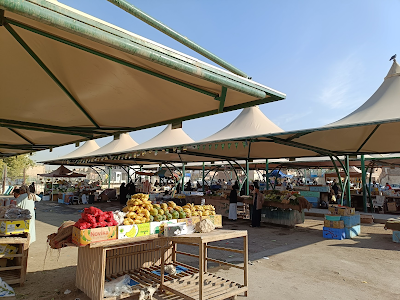
 It was shocking to see the contrast from the shiny metro station. Just a few minutes from the high-profile infrastructure project were loitering unemployed middle-aged migrant workers, a smelly open-air market, and unregulated traffic. It was a sight more reminiscent of Cairo and Tunis suffering from economic downturn, than the vibrancy of Dubai, Doha, and indeed, Bahrain. This is not supposed to be one of the wealthiest cities in the world ought to look like.
But the next morning, I saw. I was taking the metro to Masmak Fortress, the Saudi family stronghold where modern Riyadh began its rapid ascent from an obscure desert village to a future capital city. But when I took the 20-minute walk from the station to the fortress, I realized that no amount of massive infrastructure push could immediately change the visual look of a neglected neighborhood. Behind neglected concrete blocks lining the dusty main road are one-story mud houses, walls collapsing and crevices Strawn with garbage.
Yet, reflecting on how MBS and the Saudi government have been spending petrodollars, the gaping inequality is almost a matter of fact. Rather than sprucing up these historical suburbs of the city, money has been pumped into new planned ones full of skyscrapers. And instead of welfare and employment training for the masses, cash has gone into prize money for sporting tournaments and fees for international artists that matter little to the urban deprived.
This is not meant to be a criticism of government policies, however. It is simply a representation of the government's strategy and priorities for modernization. To revamp a country, it is cheaper to start anew than frustratingly tinker with old institutions of an oil state with little trickling down of economic benefits to migrant workers, who, like elsewhere in the Gulf, are ill-paid and housed in dismal conditions. So might as well plow ahead with new projects, and those who cannot keep up can automatically be marginalized into the city's decrepit underbellies.
There is just one problem. In a country where migrant workers are the majority, Riyadh cannot feasibly keep all those invisible corners hidden from the views of a growing number of tourists. Ironically, the spiffy new metro system has made many of these dark underbellies easily accessible to the curious and adventurous. Indeed, even in this spread-out city of highways, a few blocks' walk from a skyscraper, a mall, a sanitized tourist attraction, and a metro station are areas the authorities probably don't want new visitors to see.
Perhaps when the government finishes pumping money into building the new Saudi Arabia, they will finally get to clean up the old parts and once again craft a uniform look for the country. But until then, the first impressions, like that of the Chinese businessman, will remain unfavorable. In a region already full of skyscrapers, petrodollars, and expensive sporting events, MBS and Co. will have to do something a bit more innovative and egalitarian, if I may dare to say, to be "more developed" than its neighbors.
Comments
Post a Comment