To Fight Distrust, It is More Efficient to Prepare for the Worst Rather than Spend Time Investigating It
I monitor the viewer stats of this blog from time to time. In recent months, the blog stats have shown some suspicious stats that make me worried about where and how the blog is viewed. Whereas individual blog posts have no more than 20 pageviews each in total in the months after publication, sometimes the blog itself registers more than 500 views in a single day, all coming from Hong Kong, mainland China, Ireland, and Singapore, none of which match my traditional viewership in the past years, the vast majority of which originates in the US, combined with the foreign population in Japan.
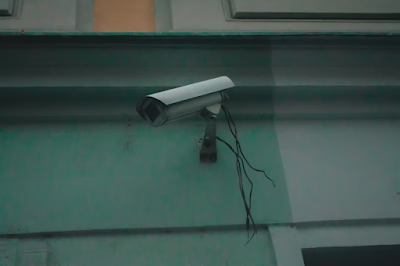 The suspicion lies in the possibility of the blog being monitored by Chinese authorities and their foreign proxies for seditious content. This blog has indeed criticized many Chinese government policies, particularly in the sphere of ethnic relations, where I strongly believe that the Chinese government and the public's increased inclination toward Han-chauvinism are both alienating the country's various ethnic minorities and making it difficult for the country to attract sufficient immigrants in the future to offset the steadily worsening demographic situation.
 That contagion of distrust was on full display in the recent movie Civil War. Set in a hypothetical US in the future where the federal government is fighting a losing battle against Californian and Texan secessionists, the movie, instead of focusing on the reason for the conflict, looked into how individuals are just trying to cope with the escalating situation, focusing on how they should protect or kill to ensure that they are on the right side when the dust settles. Every encounter with strangers on the road to hostile territory leads to moral conundrums that can change beliefs and personal values in a short time.
 Jessie's transformation is part of a bigger message that the movie is trying to communicate. In peacetime, it may be wise to contemplate how to reduce the ideological division that has plagued America since the rise of Trump and his nativist political movement. There are plenty of arguments to be made about how people of different stripes can be persuaded to calmly come to the negotiation table for political compromises. But once the guns start firing across those ideological divisions, calling for reason and peace no longer made sense. The ship for rationality based on morality has sailed.
The fact that without any concrete evidence, I almost reflexively saw a welcome boost to this fledgling blog's viewership in the most nefarious light possible reminds me of just how basic trust toward the government can be lacking. This issue goes beyond myself or the suspicion of the Chinese government's surveillance of ethnic Chinese individuals living abroad. The idea that our politicians and bureaucrats are fundamentally not to be trusted can quickly erode our relationship with not just those who are supposed to provide us with public services or those around us who depend on those services for survival.
That is indeed the movie's young female protagonist Jessie. Initially filled with the idealism of documenting the wartime violence in the most professional way possible, through her journey to the frontline of the war with several veterans, she learned to internalize her shock at the inexplicable deaths that broke out and surrounded her at every turn. The end of the story saw her stop asking whether these deaths ought to happen or be prevented based on her beliefs of justice, human rights, and friendship. She just focused on documenting every death she encountered in the best possible picture.
Realizing how quickly differences can create conflict only helps entrench distrust. Rather than expending limited resources and time on reaching across the aisle and investigating whether common ground can be found, doesn't it make more sense to use the resources and time to build walls, collect allies, and field weapons that can serve as the best available preparations for survival during conflict? It was Jessie's realization too: rather than investing her limited attention in sympathy toward those around her, she learned to create those emotional walls that help her tune out everything that prevents her from taking the best possible pictures under fire.
It is a mentality that I increasingly see in my dealing with the world around me. It is best to assume that I am a target of surveillance, no matter how thin the supporting evidence might be. Whether I am being monitored is not important when I think about what I can do to keep myself safe if I am, one day, brought in front of a faceless tribunal and questioned for my seditious views. Thinking of the worst possible scenario and doing something about it today, no matter how hypothetical it may be, would be the most efficient way to combat the distrust that I cannot and should not easily dispel.
Comments
Post a Comment